
What Happens on Embarkation Day? A Simple Guide for First-Time Cruisers
- May 11
- 6 min read
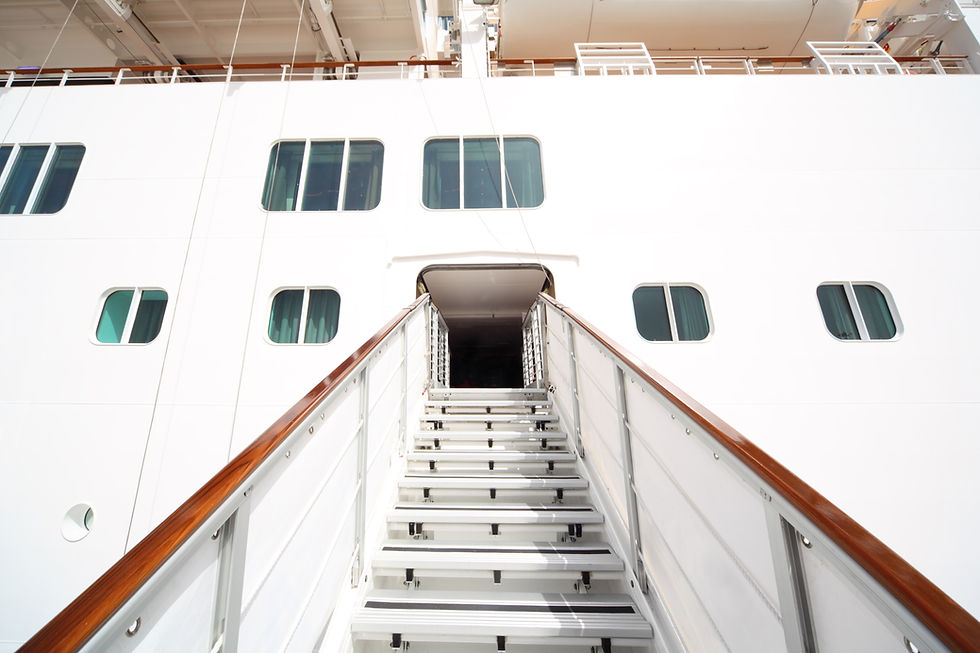
Embarkation day is the day your cruise begins.
It is exciting, slightly chaotic, and often one of the moments first-time cruisers feel most unsure about. You have your bags, your documents, your boarding time, and a ship waiting for you, but what actually happens when you arrive at the port?
The good news is that embarkation day is usually much more straightforward than it feels beforehand.
This guide explains what to expect, step by step.
The simple answer
On embarkation day, you arrive at the cruise terminal, check in, go through security, board the ship, find your cabin, complete any required safety steps, and begin settling into life onboard.
It is the cruise version of airport check-in, hotel arrival, and holiday excitement all rolled into one.
Before you leave for the port
Before heading to the terminal, make sure your essential documents are ready and easily accessible.
You may need:
passport or accepted travel ID
cruise boarding pass
luggage labels
travel insurance details
Any visa or health documentation required
payment card for onboard spending
medication, and essentials in hand luggage. Make sure you have the medication boxes with the medication.
Do not pack important documents in your main suitcase. Your large bags may be taken from you before check-in and delivered to your cabin later.
Keep anything important with you.
Arriving at the cruise terminal
When you arrive at the port, there will usually be signs, staff, and luggage drop-off points.
The first thing you may do is hand over your larger suitcases. These should be tagged before you drop off, and then they are taken away so they can be delivered to your cabin later. This is why your luggage labels matter.
You then head into the terminal for check-in. It can feel busy, but cruise terminals are designed to move large numbers of passengers through the process.
Check-in
At check-in, staff will usually confirm your booking and identity.
They may check:
your passport or ID
Your boarding pass
Your booking details
your photo
Your payment method for onboard spending
Some cruise lines ask you to complete parts of check-in online before arrival. If you have done this, the port process is often quicker.
You may also receive or activate your cruise card. This card is important because it usually acts as:
Your cabin key
Your onboard payment card
Your ID for leaving and returning to the ship
Your way of checking in and out at ports
On newer ships, this may be replaced or supported by an app, a wristband, or a digital system.
Security
After check-in, you will go through security.
This is similar to airport-style security, although usually less intense than flying. Your hand luggage may be scanned, and you may walk through a security scanner.
The rules vary by port and cruise line, but it is sensible to avoid packing anything restricted or questionable in your bags.
Boarding the ship
Once check-in and security are complete, you will be called or directed to board.
This is the moment it starts to feel real.
You walk up the gangway, step onto the ship, and your cruise has officially begun.
Staff may welcome you on board, scan your cruise card, or direct you toward public areas, lifts, or dining venues.
Can you go straight to your cabin?
Sometimes yes, sometimes no.
Cabins are often not ready immediately, especially if you board earlier in the day. Cruise ships have only a short turnaround window between one group of passengers leaving and the next group arriving, so housekeeping teams are working very quickly.
If your cabin is not ready yet, you can usually explore the ship, have lunch, or relax in a public area.
This is why it helps to keep a small hand luggage bag with essentials such as:
medication
phone charger
documents
swimwear if you want to use the pool
valuables
anything you need before your main suitcase arrives
Lunch and exploring the ship
Many people head straight for lunch after boarding.
The buffet is often open, and some ships also offer main dining rooms, cafés, or casual venues.
This is also a good time to begin exploring. You can find:
restaurants
lounges
pool decks
theatre
spa
gym
bars
kids’ areas
guest services
muster station
Try not to do everything at once. The ship will still be there tomorrow. Revolutionary concept, I know.
Your luggage may arrive later
Your main suitcase will usually be delivered to your cabin, but it may take a few hours.
Do not panic if it is not there straight away.
On large ships, thousands of bags are being moved around behind the scenes. Your bag may arrive before dinner, but exact timing varies.
This is another reason to keep first-day essentials with you.
The safety drill
Every passenger must complete a safety briefing or muster drill.
This is not optional.
In the past, this often meant gathering at a muster station at a fixed time. Many cruise lines now use digital or simplified systems where you watch a safety video, check in at your muster station, or complete part of the process through the cruise line’s app.
The process varies, but the purpose remains the same: ensuring passengers know what to do in an emergency.
Complete it early, so it is done, and you can relax.
Setting up your onboard account and app
Many cruise lines now use an app for daily programmes, restaurant bookings, messaging, excursions, account checking, and safety information.
On embarkation day, it is worth making sure:
The cruise app is downloaded
You can log in
Your onboard account is set up
Your dining arrangements are clear
Any bookings you made are showing
You understand how to check the daily schedule
You do not need to master everything immediately. Just make sure the basics work.
Sailaway
Sailaway is one of the best moments of embarkation day.
This is when the ship leaves port, and your cruise officially gets moving. Some people watch from the open decks, some from their balcony, and others from a bar or lounge.
There may be music, announcements, or a sailaway party depending on the ship and cruise line.
For many first-time cruisers, this is the moment it finally sinks in:
You are actually on a cruise.
Dinner on the first evening
Your first dinner may depend on your dining arrangement.
You might have:
fixed dining time
flexible dining
buffet dining
speciality restaurant booking
casual dining
If you are unsure where to go, check your cruise card, cruise app, or daily programme. Guest services or restaurant staff can also help.
The first evening can feel a little busy because everyone is still settling in. Give yourself time.
Things that may feel confusing at first
Embarkation day can feel overwhelming because everything is new.
You may wonder:
where your cabin is
When will your luggage arrive
How dining works
How to use your cruise card
whether you need to book shows
Where to go for the safety drill
How to find your way around
This is normal.
The first few hours are not about knowing everything. They are about getting on board, settling in, and slowly finding their bearings.
Embarkation day tips for first-time cruisers
A few simple tips can make the day easier:
arrive at your allocated boarding time
Keep documents and essentials in hand luggage
Attach luggage labels before arriving if required
Complete online check-in before the cruise
Download the cruise line app before you leave home
Do the safety drill as soon as possible
Take a photo of your cabin number if you think you may forget it
Do not overplan the first few hours
Give yourself permission to feel slightly overwhelmed
That last one matters. Embarkation day is exciting, but it is also a lot of information at once.
What not to worry about
You do not need to know the whole ship immediately.
You do not need to book everything within the first hour.
You do not need to unpack as soon as you arrive.
You do not need to understand every dining option straight away.
The cruise will unfold. You have time.
Final thoughts
Embarkation day is the beginning of your cruise, and it can feel like a lot before you have done it once.
But the process is usually simple:
Arrive, check in, go through security, board the ship, complete the safety procedures, settle in, and enjoy your first evening on board.
Once you understand the flow of the day, it becomes much less intimidating.
Your first cruise does not need to begin with confusion. With a little preparation and a calm approach, embarkation day can become one of the most exciting parts of the whole holiday.


Comments